The Danger with Faith-Based Humanitarianism


Published by Today's Zaman, 21 January 2013


Without a doubt, one of the least acknowledged heroes of global efforts to eradicate poverty and diseases, respond to emergencies and advance human rights and welfare are faith-based organizations and initiatives.

Faith-based groups are able to raise funds and mobilize effectively both in their home countries and internationally. Often, their workers are seen in some of the most dangerous places on earth, taking serious risks to their lives, trying to help people in places that traditional organizations or international bodies fail to reach. There is much to applaud in their work. However, just as the work of traditional mainstream charities has often unintended negative side effects, faith-based humanitarianism too has its demons.

While this is increasingly changing, most of the time, faith-based initiatives tend to bring help to and raise awareness of the suffering of their own co-religionists. Thus, Christian groups in the developed world seek to address the persecution of Christians abroad and often send aid to their co-religionists. This applies to all faith-groups, whether Muslim, Christian or Jewish.

This is not necessarily wrong and truly understandable. None of us can address every issue in the world, and all of us choose issues and concerns that we are related to or have an interest in. Writers who support the concerns of writers in other countries, or academics seeking to protect scholars at risk, or feminist groups working on women's rights abroad all emerge from the same human starting point.
However, unless it is balanced and self-reflexive, faith-based initiatives that emerge from a single tradition and only seek to address the suffering of their own co-religionists can undermine not only the welfare of their own brethren abroad in the long run but also the entire sprit of humanitarianism.

For example, the last 10 years have seen an immense increase in persecution of Christians globally. A plethora of Christian groups that promote religious freedom abroad emerged, and almost all of them only address the suffering of Christians in the countries for which they advocate. Yet, all of the problems faced by Christians in a given country are only part of a larger problem that persecutes other minorities too, and only with a holistic approach can their suffering be ultimately addressed. By only raising the suffering of Christians, say in Iran, Christians de facto turn a blind eye to the suffering of others, for example, Baha'is in Iran who suffer much more than Christians. This poses some serious ethical questions about their work.

Most importantly, faith-based activism can easily contribute to the imagined “clash of civilizations” narratives and cement increasing prejudice among faith groups in the world. Take the example of the Turkish discovery of the suffering of Rohingya Muslims in Myanmar. The Turkish public has only recently really heard about them and, by and large, only recently learned where the country is on the world map. When the depth of the suffering of Rohingyas became known, thanks to the efforts of the Turkish government, the Turkish public was rightfully outraged and Turkey rightfully has been working hard to help Muslims in Myanmar. 


All of this is noble and valuable.However, in the process of this interest and response, calls to help Rohingya Muslims repeated all of the fundamental mistakes of faith-based humanitarianism. In Myanmar, not only the Muslims but other ethno-religious minorities too continue to face ethnic cleansing, famine and serious human rights abuses. Christian peoples of Chin, Kachin and Karen fill up refugee camps on the Thai-Burmese border. Yet, none of the appeals for Myanmar in Turkey raised the issue of their suffering alongside the suffering of the Muslims.

More worryingly, the Rohingya issue often became portrayed in the “when Muslims suffer, the world is silent” narrative. In this case, it can be empirically proven wrong. For more than a decade, I have witnessed first-hand the work of a wide range of groups working on suffering of ethno-religious minorities in Myanmar, most of which were either Western or non-Muslim or were formed by other ethnic exiles from Myanmar. The UNHCR has campaigned for years to address the treatment of Rohingya refugees.

While it was tempting to slip into the usual “evil West” syndrome, hardly any Turkish commentator asked the painful question: Why is it that the Muslims of the world have only discovered the Rohingya now? Similarly, in almost all articles I have read in the Turkish press that lapsed into this “no one cares about Muslims” narrative, none really mentioned that one of the worst expressions of suffering of Rohingyas today is in Muslim-majority Bangladesh.

Such confused representations are often caused by a lack of knowledge of complex issues and awareness of the efforts of so many groups trying to do something. Yet, when faith-based humanitarianism slips into working only for their own brethren and into the narrative of “the world is against us,” it fuels dangerous misperceptions and prejudices. This does not help the suffering of their co-religionists in the long run, and empties their humanitarianism by reducing it to partisanship carried on the global stage.

The solution to this vulnerability of faith-based initiatives does not lie in secular humanism, but in faith traditions themselves. In all religions, we see strong theological mandates to love one's neighbor and help those in need, even when they are utter strangers. Thus, the problem with faith groups today is that they are often not faithful enough. They are vulnerable to give in to the all-too-human sentiments to care for “one of us” when they should be fixing their eyes on their Lord, who teaches them to love and help every human being, no matter who he or she is.
The Future of Gulen Movement


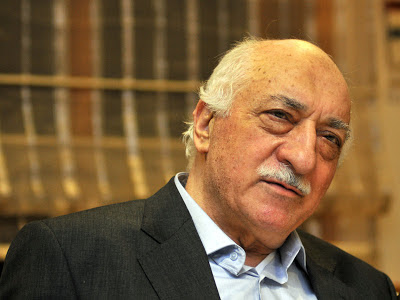
Leaving aside all of the conspiracy theories and anxieties, the Gulen movement, also known as the Hizmet from the Turkish word for service, is one of the most fascinating and out of the box faith-based movements that have emerged from the Muslim world recently.

It is clear that the movement has come a long way from its humble origins in Turkey as a local conservative Islamic initiative to rejuvenate faith into a global network of schools, charities, media outlets and businesses. Today, Turks inspired by the teachings of the Turkish imam and scholar Fethullah Gulen can be seen setting up institutions, organizations and companies in far flung corners of the world.

While most of what is written about the movement remains retrospective and critical of its current status, in this brief article I want to draw attention to few questions that need to be asked in order to forecast the future of the movement.

First of these is what will happen when Mr Gulen passes away? While he still accepts visitors, delivers talks, studies and publishes, it is a well known fact that his health is weak and he does suffer from the all too human limitation of being mortal.

The dynamic nature of the organization of the movement means that even though there is an organic accountability structure, local initiatives are independent in their day to day affairs. Thus, Gulen’s death would not cause a stop or change in any of the movement’s activities.

However, even though currently Gulen only serves as a wise authority that countless bodies approach on issues of disagreement and crisis rather than a CEO with executive powers, without him the movement will lack a ‘plumb line’ that will keep it focused and united.

After Gulen, issues of dispute, difference and conflict will be solved either through interpretation of his work or through the intervention of key figures of the movement, thus opening the door for non-conclusive tensions and debates on ‘what would Gulen do’. This will inevitably create power-tensions and personality clashes among leaders of various segments of the movement as well as different theological preferences.

The movement is now too large and diverse in political, social and economic backgrounds for any voluntary network to maintain coherence and without a spiritual guide that holds its vision together, different voices and cohorts will inevitably pull charities and organizations to different directions.

Will the movement’s Turkish nationalist and liberal voices clash in their visions? Will the globally experienced cosmopolitan affiliates find themselves at odds with Gulen followers in more traditional Turkey? Will significant economic and social uplifting we see in Hizmet circles open the door for resentment of its own privileged elites? In other words, will we see multiple Hizmets?

While most of those who associate themselves with Mr Gulen’s teaching are sincere folk who try do their best to serve to humanity as Muslims, undeniably, it is now profitable to affiliate with the movement for business and self-advancement purposes, thus not all who join the ranks have clear pure motives. Therefore, as its reach and influence continue to grow, will the movement be able to maintain its spiritual core values or will it evolve into becoming nothing short of an Islamic equal of the Rotary or Lions clubs?

The future of the movement also goes through on how it will handle its roots and activities in Turkey. Will the movement remain as a movement of Turks abroad or will it make the jump into becoming a truly global movement that originated in Turkey but includes peoples of all nations? 

Thus far, vast majority of activities of the movement can be seen as Turks carrying the Turkish flag and culture abroad alongside its more universally appealing faith-inspired values. While the movement is enculturating itself abroad through second and third generation migrants and locals who studied in Hizmet schools, it is still dominated by Turks, Turkish and Turkish culture.

Accusations of institutionalization in key Turkish state structures continue to cast a cloudy shadow on the movement, although a lot of this sort of thinking is exaggerated thanks to the annual need in Turkey to find a domestic threat to nation’s secular existence. Nevertheless, the initial know-how and survival strategies of the movement in Turkey are increasingly stifling its global future. Will the movement be able to put its Turkish home in order and move on from its old frameworks?

These are neither all of the questions that need to be asked or a comprehensive list of things to watch out for. Nevertheless, the answers researchers and affiliates of the movement might seek to give to these questions will not only be vital in developing healthier understanding of the movement but also similar new generation Islam inspired civil movements that do not fit into any of traditional categories we ascribe to them.


New Essay: A Duty to Remember?

"A Duty to Remember? Politics and Morality of Remembering Past Atrocities"

by Ziya Meral

Journal of International Political Anthropology, Vol 5 (2012) No.1 


An allusion to a “duty to remember” the dark episodes of history is a common occurrence in
today’s politics and popular discourse. The vision behind the call never to forget genocides,
massacres and wars is noble and praiseworthy. However, the way in which such events are
formulated and used is so embedded in the present as to raise serious questions about the
morality and political agendas of those who selectively undertake projects to enshrine past
atrocities. This essay seeks not only to decode the socio-political process for handling the past
but also to challenge the conventional belief that remembering the past will prevent future crimes
and heal countries. It goes on to argue for a balanced, realistic and ethical relationship between
the past and present.

New Publication: Caring for the "Other" as one of "Us"

Dear readers,

I am pleased to notify you on the release of a new book I contributed to.

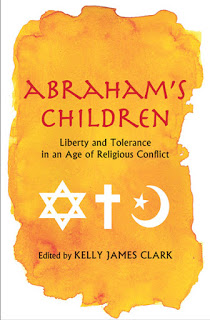
Abraham's Children: Liberty and Tolerance in an Age of Religious Conflict has been released by Yale University Press. It brings together 15 Jewish, Muslim and Christian scholars, activists and politicians to challenge and urge their co-religionists to follow a path of peace making in an age of conflict.

Archbishop Desmond Tutu endorsed the book with the following statement: "Tolerance is in all-too-short supply in our world. Most attempts to cultivate greater tolerance urge us to set aside our differences, including our religious differences, and focus on what unites us. Many people find it difficult if not impossible to do that. The authors in this collection, each one a leading member of one or another of the Abrahamic religions, take a strikingly different and fresh approach. Each one probes the resources of his or her own religion to make a case for tolerating one's fellow human beings even when one disagrees on important matters. Over and over I had the experience of scales falling off my eyes. It would be hard to exaggerate the importance and promise of these fascinating essays for advancing the cause of tolerance."

Below is the full list of contributors.. 

Intro: Kelly Clark

Jewish Voices: Einat Ramon, Dov Berkovits, Leah Shakdiel, Arik Ascherman, Nurit Peled-Elhanan

Christian Voices: Jimmy Carter, Nicholas Wolterstorff, Ziya Meral, Hanna Siniora, Miraslov Volf

Muslim Voices: Abdurrahman Wahid, Hedieh Mirahmadi, Fethullah Gulen, Rana Husseini, Abdolkarim Soroush

New Essay: International Religious Freedom Advocacy in the Field

A new essay where I survey how religious freedom advocacy is done today, how and where it differs from regular human rights advocacy work, what challenges it faces and its future.

"International Religious Freedom Advocacy in the Field: Challenges Effective Strategies and the Road Ahead", The Review of Faith & International Affairs; Volume 10, Issue 3, 2012;

Access the essay here!


Opposition Party Job Vacancy- Apply Immediately


Published on 8 August 2012


This is an urgent call for applications for an urgent vacancy in Turkish politics. Turkey is one of the fastest-growing economies in the world and an increasingly vital player in its region and in global affairs.

Turkey is currently looking for a political party to enable it to fulfill its increasing potential for democratic growth and global reach and address certain structural and social problems that have the potential to derail a historic opportunity to leap forward.

About the job:

The role of a robust opposition party is one of the most important elements of a healthy democracy. Although it does not have an executive power, it is a vital safety net and accountability point in balancing the performance of a ruling government.

An opposition party monitors policies and actual performance of the ruling government closely, analyzing their short and long-term implications and providing the public with clear points on a government’s shortcomings and their alternatives.

Where necessary for the best interest of the country, an opposition party affirms policies of the government and works closely with its own constituency to advance them. While this might seem like a win for the ruling party, in the long run it only strengthens the credibility of the opposition of the party.

An opposition party closely monitors the wishes of the entire country, not merely a thin slice of the public who are committed voters. This is vital in strengthening the party’s reach, limiting the unchecked influence of a ruling party and developing alternative policies that the public would support.

About you:

Your party must have closely read and internalized the job description above and perform accordingly. This is not a literary post for delivering untruthful but creative talks.

Previous political experience is not necessary. In fact, if you form a new party, it is much better than thinking you can reform a party that has been fixed in myopia for decades.

You must be able to use discourse that is not character discrediting and personal street-fight style verbal attacks on the ruling party, but actually focus on policies and performance.

You must have something to say beyond referring back to 1923 or any other glorious past. You must focus on Turkey’s future and include not some but all of the citizens of Turkey in that future.

You must move beyond 20th-century classifications that do not have much value today, including “left,” “right,” “social democracy” and “laicite.” The Turkish public moved on from these some 15 years ago.

You will have a leadership team that reflects all of the ethnic, religious and cultural spectrum of Turkey and appoint them not because they are loyal to the party leader but are actually qualified and energetic people that can do the job.

Application process:

Please apply immediately, especially given that the next two years will witness tremendous tensions both in Turkey and internationally. While some paperwork and an outdated political party law might seem to be the main challenge for you, your main test is not on getting a legal status and publishing banners and advertisements. You will only get this job when you win the trust of the Turkish public and only remain in office as long as you perform along the lines mentioned above. Remember, this is a fixed term contract and not a tenure.